

Ramat Empowerment Initiative


Josphine Naramat Lentiyani was only 24 years old when we added her as a partner, but she had been head-of-household for 14 years! When she was ten-years-old, Josphine’s parents abandoned the family. Her older siblings scattered to fend for themselves, so Josphine sought work to support a bedridden grandmother and three younger sisters (one was an infant). The experience was devastating, but it made her very compassionate towards others. We have been impressed with Josphine’s tenacity, her insistence on living with integrity even when it costs her, and her tremendous love for children who are suffering.
Josphine helped develop our entire Kenya program. Most of the secondary school children we support attend AIC Moi Girls Samburu in Maralal, Kenya. While there are elementary schools in every village, there are few secondary schools in rural areas. Girls from small villages must often relocate to attend a regional boarding school if they wish to continue their education. Although the school is very inexpensive, less than $500 a year for tuition, room, and board, few students can afford to attend. Many try, however, because the girls dread the alternative.
Josphine works with girls from the Samburu Tribe, being Samburu herself, in which the incidence of beading (a form of child sexual slavery), female genital mutilation (FGM), and forced child marriage are among the highest in the world. When parents can no longer afford to send their girls to school, they marry them, against their will, to old men. We target girls who are not only vulnerable to child marriage but who also have a strong drive to receive an education.

When secondary school girls are added to the program, they often promise they will work hard and make us proud. At the end of secondary school, they take a national exam called the KCSE. The results of this exam determine if students are qualified to continue to a college (easier) or university (harder). In 2021 when we began the program, Moi Girls did way below the country average. But our graduating seniors (Form 4) in 2023 showed a dramatic change – Moi Girls School was even featured on the local news for being the most improved school. In 2024 they once again boasted the highest improvement of any school. 83% of our graduating seniors qualified for university compared to 26% for Kenya as a whole. Our girls are indeed making us proud!

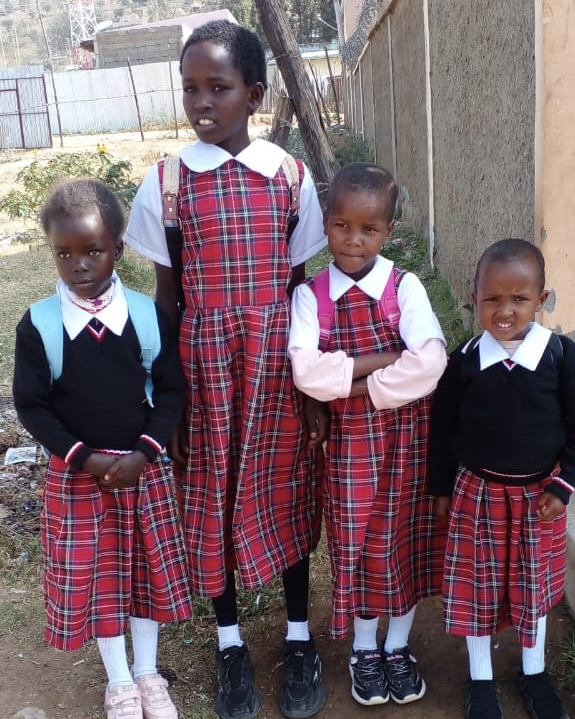
The younger children in the program also face dire circumstances. They might be severely abused, victims of repeated sexual assault, or those trying to escape forced marriages. Girls in kindergarten to grade three typically live with Josphine. Those in grade four through nine are in local boarding schools so she can periodically check in on them to ensure they are not only progressing academically, but emotionally as well. She even supports a few boys who were in desperate situations.
Our goal is to do more than just pay tuition. We want to build their self-confidence through weekly clubs which use a curriculum we designed to help children overcome challenges, build their self-confidence, and develop problem-solving and leadership skills. In short, we created it to raise up the next generation of changemakers. Each meeting throughout the school year touches on a different topic of interest to the children, revolving around the theme of “power” – how to grow their power and use it to benefit their communities. More than 1,000 students participate in the clubs each year. The kids find the curriculum very empowering, and these are some of the comments we’re hearing from the girls:

The boys’ clubs have also been quite interesting and the boys have been extremely engaged. On the topic of FGM, for example, the leaders start the meeting by asking how many boys would consider marrying an uncircumcised girl (one who has NOT undergone FGM). Almost none would even consider it. Then we let the boys discuss the pros and cons of FGM. Our leaders consider all opinions valid and pass no judgment, however they do share a couple facts:
- Female circumcision is much more painful and dangerous than male circumcision, and some girls die from excessive bleeding and infections.
- Scar tissue isn’t flexible like healthy tissue, so babies can get trapped in the birth canal, killing the baby and mother.
They also address superstitions like, “A man will die shortly after marriage if he marries an uncircumcised girl” and “An uncircumcised woman is incapable of getting pregnant.” At the end of the meeting, we once again ask if any of the boys would consider marrying an uncircumcised girl, and almost all say they would prefer an uncircumcised girl.
Josphine was surprised on village visits when men, too, shared they had no idea what women faced with FGM because women don’t ever speak about it. They asked for more education. Josphine now dreams of starting a radio program in the Samburu language to bring such education even to remote villages.
